
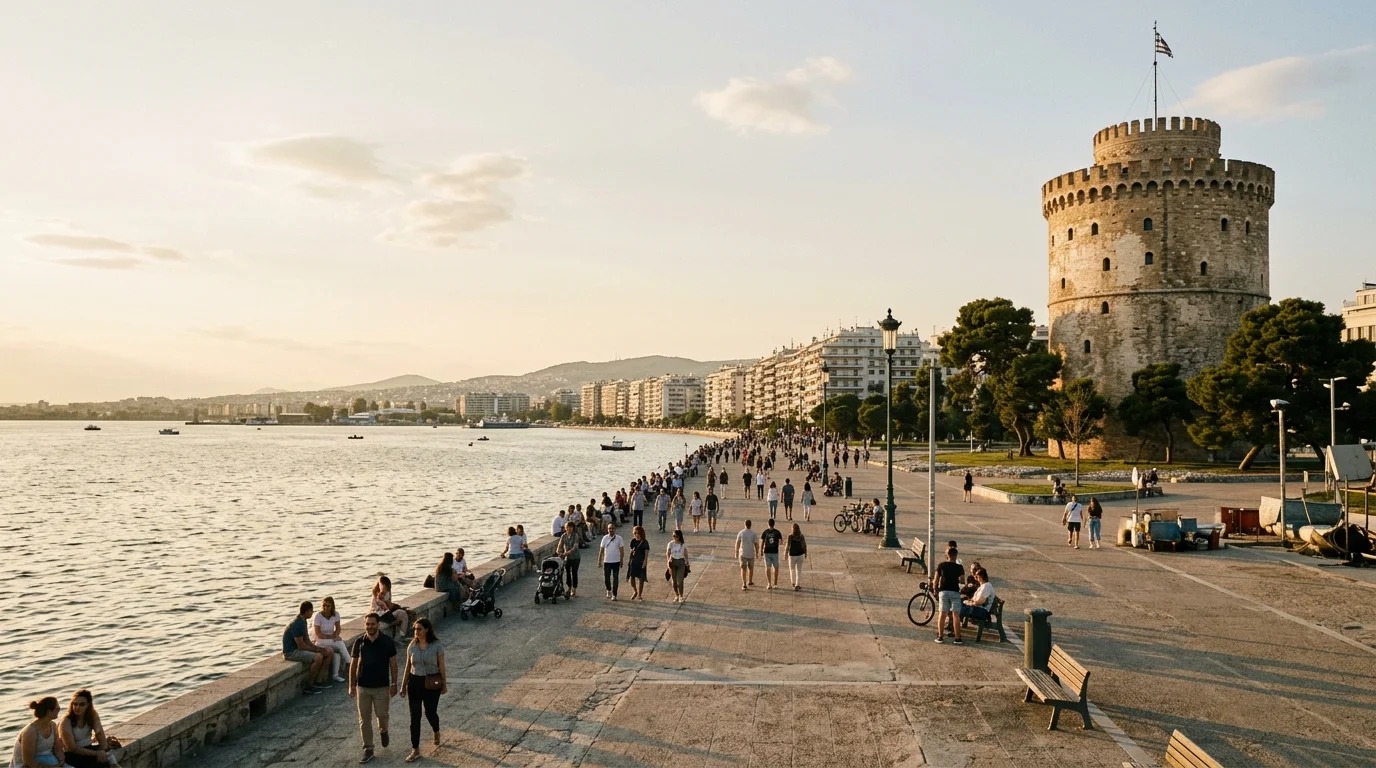
The city combines a seafront promenade with a layered historic center and neighborhoods rising above it. A short visit works best when you choose a specific route rather than treating all landmarks as equally close.
Start with the waterfront
The area around the White Tower is a recognizable orientation point. Walk a section of the promenade and decide whether to enter a museum or continue along the water. Check opening hours and leave time for a meal.
Consider the upper town separately
The historic upper streets involve a climb, so compare walking with available transport. Choose a few viewpoints or buildings rather than a long uphill checklist. Check visitor rules at religious sites, carry water and save the return route. If the weather or energy changes, a waterfront-focused day remains worthwhile.
Begin with the waterfront or the upper town
The waterfront around the White Tower provides a recognizable starting point. Follow a manageable part of the promenade and look at the relationship between the city, the Thermaic Gulf and its public spaces. If you want to enter the White Tower or a nearby museum, verify the current opening and ticket arrangements. Aristotelous Square offers a useful connection into the central streets, but there is no need to cover the whole waterfront before heading inland.
The Ano Poli district, above the center, provides a different scale of architecture and streets. Parts of the old city walls are associated with elevated views. Investigate the actual uphill route and the condition of the walking surfaces, particularly in hot weather. One practical option is to use suitable transport to reach the higher district and plan a measured walk from there. Check the current stops and routes rather than assuming the nearest-looking road is suitable.
Use the city's historical layers to choose a second stop
The Roman Rotunda and Arch of Galerius are examples of a different historical period from the waterfront and upper town. If that history is important, build a separate small circuit around those sites instead of adding them as a rushed detour. Religious buildings and museums have individual visitor arrangements. Choose a meal stop according to the area in which you finish your walk and save a straightforward return route. The day works best when its lower and upper sections are connected deliberately, with time to observe how the city changes between them.
Images are generated editorial illustrations. Confirm current access, schedules and conditions before traveling.